Showing posts with label Social Justice. Show all posts

Tuesday, June 9, 2009

Change

A friend of mine posted this video on her Facebook site. More details about the project can be found on the Play For Change Website. Take some time and check it out. The website explains it best:

"Playing for Change is a multimedia movement created to inspire, connect, and bring peace to the world through music. The idea for this project arose from a common belief that music has the power to break down boundaries and overcome distances between people. No matter whether people come from different geographic, political, economic, spiritual or ideological backgrounds, music has the universal power to transcend and unite us as one human race. And with this truth firmly fixed in our minds, we set out to share it with the world."


As I listen to the music and think about the concept it makes me wonder what it really takes to change the world. It can overwhelm us just thinking about all the people in need from poverty, wars, social justice, education, and all the kids needing a safe loving family... It makes me want to throw my hands up and ask God why he allows this to happen, why should I bother. Only God can fix all these things.

But maybe the point is that God wants us to fix these things and as we find our part in the story we can make a difference. I also think as we see the suffering and do not turn our back, we are touched in a unspeakable ways. I am not talking about writing a check to the United Way or Homeless Shelter (those are good things). But, I am talking about opening our eyes to find unexpected opportunities, personally touching a strangers life even if it means being inconvenienced. As we touch other peoples lives and open our walls to a community that we are not comfortable or familar with, we begin to see diversity, hope, and suffering being overcome. Maybe that is a glimmer of heaven?

Who knows, but look for someone to help out that you don.t know and post your experience here.

Saturday, September 6, 2008

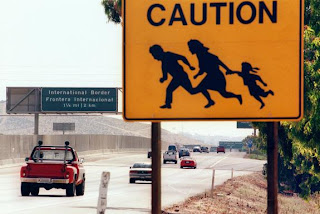
Thoughts from a former "Illegal Immigration"

I received this email from a good friend who now is pastor in Apex. It is heartfelt and an interesting perspective.

What follows is a first attempt to respond in a pastoral way to this topic. I'm not responding to any particular point of view. I simply want to add my own limited view to this conversation in a spirit of friendship and openness. I speak to this issue from my own experience as a Latino immigrant, as a Protestant Christian, as an evangelical pastor, as a head of household of a Latino family.

Immigrants come to this country for different reasons. I was brought here by my mom to protect me from the civil strife of my country of birth. One of my brothers was killed by the military at age 16. My oldest brother was arrested by the military at age 17. I was 15 when I left El Salvador to come here.

I remember having a difficult time adapting to a new home, new culture, and new life. Language was different, relationships were different, values were different, living for the first time in my life with my mom was different, etc. I was unhappy and angry at everything that was happening to me. I wanted to go home, my real home.

Two identities were new to me in this culture. First, I learned that I was a Hispanic person. The church I attended was Hispanic, my mom's friends were Hispanic, my friends at school were Hispanic, the places we ate were Hispanic, the TV channels we watched were Hispanic, the places we bought groceries were Hispanic, etc. Second, I was an illegal alien. I didn't feel much different than other Hispanics. But nevertheless I knew not to tell to strangers that I was an illegal.

In 2001 I immigrated to this country again. I was no longer a newcomer but my wife was. Through her I relived some of the emotional and social challenges that comes sometimes with being an immigrant. In an instant she lost all of her support networks (family, friends, church, neighborhood, university, etc) and felt disconnected and isolated. She became overly dependent on others for things that she use to be able to do alone (go to the market, ride the bus, attend church, make a phone call, meet people, etc.). But God was with us, we had each other and we had the love of Christian brothers and sisters to help us get through. And we still do.

As a Latino pastor, I hear from Latinos who are struggling because they are not able to find a job or receive services available only to legal people. Many Latinos live with the fear of being deported and separated from their families. There is fear of raids from Immigration and Customs Enforcement (ICE) at job sites or homes. I hear from people who wrestle with feelings of humiliation, of not being appreciated, of not belonging. People who tell me that no matter how hard they work and how many sacrifices they make their quality of life is diminishing. Why don't they just go back home?

The point is this is home. I have more relatives here now than any other place in the world. Two of my kids were born here. I have friends here. I have a church family here. I received an education here. I serve Christ here. God's dreams for me are tied to my presence in this land. Through it all, with its ups and downs, I have experience the love, embrace and hospitable spirit of people in my new home, particularly from sisters and brothers in Christ.

What are we to do as Christians?

The most important word we can share with illegal immigrants is that they are children of God. This child of God identity is an unequivocal truth. Divine recognition of the dignity of the human person, so much so that God didn't withhold even his only Son, uplifts people who feel disenfranchised and provides a sense of purpose and belonging again.

I speak to this from my own experience. To know that I'm a child of God before I'm anything else is the strength and foundation of my existence. Yes, I was born into Salvadoran citizenship. Yes, I was a U.S. illegal. Yes, I became a Permanent Resident. Yes, I'm now a Naturalized U.S. citizen. These identities are part of my story and have shaped who I've become. But nothing has shaped me and is more important to me than to know that I'm a disciple of Jesus Christ and a citizen of God's new people. No matter how many borders I cross that identity stays with me.

It is through Jesus' Lordship and teachings of the Kingdom of God that we can discern how to best respond to the challenges and opportunities of our own context. We don't get to choose our parents, birthplace or time. But in the new birth of the spirit we can experience a new life in Christ, and as the mission of Apex UMC states "invite and equip ALL to follow Jesus in transforming the world.

The life on earth of our Lord Jesus can enlighten our dialogue. Jesus, himself a Jew, grew up not protected from the guarantees of class or citizenship. As a newborn of a common Jewish family, Jesus and his parents immigrated to Egypt to escape a government policy that would have ended with Jesus' life. As a Jewish adult, when judged for his teachings by the religious and political powers of his day, Jesus couldn't appeal to Caesar (like any Roman citizen) and was sentence to death overnight. Yet, Jesus' understanding of his Sonship, his conviction that God was with him even on the cross, allowed him to overcome any temptation to give in to hopelessness. He conquered his own fears and transformed his own religious tradition. He spoke radically to his contemporaries about a new kind of life (a new order), teaching his visions of the "Kingdom of Heaven," of a new citizenship committed to God's will. "Our citizenship is in heaven, and it is from there that we are expecting a Savior, the Lord Jesus Christ. He will transform the body of our humiliation that it may be conformed to the body of his glory by the power that also enables him to make all things subject to himself" (Philippians 3: 20-21).

Paul in Romans 12:12 said that one of the marks of the Christian is to "extend hospitality to strangers." What does this mean for our own context? In what ways are we to show Christian love to immigrants in our midst? Our response will determine how aligned we are or how distant we are with God's will and the teachings of our Lord.

Our nationality, ethnicity, race, culture, economic status, experience of God, and theological interpretation will inform our opinions on issues like this one. And that's OK. We enter this conversation not from a void but from a real self. As we engage in dialogue let us seek God's Kingdom first and in so doing seek the Holy Spirit's guidance and power to transcend our own limitations and prejudices to carry on the ministry of Jesus.

Saturday, July 19, 2008

Women as Deacons in the Church

If you hang in long enough to read this post, I would be interested in your comments, please post them by clicking "comments" link at the bottom of the article.

There are many interpretations depending on your perspective. But what we do know for sure is Christ is the equalizer for the poor, women, orphans, and everyone else. Not just men. If someone truly believes they have a gift and are called to serve who are we humans to judge? Was not Christ on the cross for all of us? Is it too hard to believe that the issue at hand is salvation for all and each of us have a role to play. Using any amount of energy on condemning someones calling, even if it is a "woman", means we are not focused on Gods kingdom, but our own earthly world and biases.


Women role in church:

  • Acts 2:18 - God ordained women to preach
  • Acts 21: 8-9 - 3 of Philip's daughters preached.
  • Acts 18:26 - Priscilla played key role in teaching spiritual formation even to men
  • There is some evidence that a few were women deacons

Christ and women:

  • Mark 5:25 - Christ touch women when menstruating, taboo back then
  • John 4:1-27 - Christ established relationships with women of questionable ethical and moral backgrounds
  • Gal 3:28 - In Christ there is neither male or female
  • Christ reversed the trend deliberately and had a different attitude towards women than was expected. He spoke in public with the Samaritan woman (John 4 : 27) and allowed a sinful woman to approach Him in the house of Simon (Luke 7 : 37).
  • He affirmed the equal status of the rights and duties of married couples ( Matthew 19 : 3 – 9).

Key verses people bring up are Eph 5:22-22 (wives submit) and 1 Tim 2:11-12 (learn in silence)

Taken at face value you can see why people believe women should not have roles in the church. But, looking at the bible and historically at the culture, education, and to other documents we find that it may be that some women who became Christians were quick to abuse the new freedoms of spiritual liberalization and not only spoke out about religious issues, but their marital issues and lectured husbands in the church. If that is the case, some think Paul was telling them to be silent in the church and talk in private. These scriptures were written to churches about specific issues.

The fact that the bible is believed to be infallible does not mean you take every scripture at face value or pull it out of context. Scripture was written to a certain culture and situations and to this day is valuable to Christians.

All of us see scripture through our own lens. What I mean by this is we experience life different then anyone else and we take these experiences and incorporate them into our faith and how we see scripture. I am sure we can interpret scriptures all day on all sorts of topics. But, I have to restate my first paragraph:

"But what we do know for sure is Christ is the equalizer for the poor, women, orphans, and everyone else. Not just men. If someone truly believes they have a gift and are called to serve who are we humans to judge? Was not Christ on the cross for all of us? Is it too hard to believe that the issue at hand is salvation for all and we all have our role to play. Using any amount of energy on condemning someones calling, even if it is a "women", means we are not focused on Gods kingdom, but our own earthly world and biases."

So will Women go to hell or disappoint God for being a deacon or will he rejoice because of the lives she touched and souls she brings to Christ using her unique and beautiful skills as a women?

Are we playing our part as a Christian or are we playing arm chair quarterback, picking at someone in the game?

In the end we all have a calling and only we know what God has put in our hearts. Let's travel the journey together and support each other on the way. We may disagree on some issues, but they all are overshadowed by the fact that we exist to worship him and in Christ we can do all things.

Here are some interesting info:

Greek Philosophy on the Inferiority of Women:
http://www.womenpriests.org/traditio/infe_gre.asp

History in the Baptist Church:
Even the early Baptist churches had women preach and deacons, not until Calvin and later Southern Baptist that these roles were taken away.
http://www.baptisthistory.org/contissues/deweese3.htm
http://baptisthistory.org/contissues/huffman.htm

Biblical commentary and good links:

http://www.biblicalfoundations.org/?p=38

Commentary on Church issues:

Getting the congregation involved, bridging the generational gap and the role of women.
7 min. 16 seconds into the video it talks about women in the church
http://video.google.com/videoplay?docid=9022771525666008496

Friday, April 4, 2008

Death of Doctor King 4o years ago today

This man has been my hero all my life. I remember as a kid getting picked on because I was a white kid who talked about MLK. Few years back I marched in a MLK parade and was one of a handful of white people that was not in a political position. I had a black gentlemen ask why I was there...

I read a lot about MLK through the years. I discovered towards the end of his life, he pushed other social justice issues like Antiwar, poverty, and women rights. Many whites and blacks told him to keep to his "black agenda".

I read a book titled "Where Do We Go from Here" and this statement haunts me, because it can fit today:

"A nation that continues year after year to spend more money on military defense than on programs of social uplift is approaching spiritual death." Martin Luther King Jr.

I read on MSN that King was working on a sermon the day he was killed. I don't think much of the sermon was documented. But, here is a portion found:

"If America does not use her vast resources of wealth to end poverty, to make it possible for all of God's children to have the basic necessities of life, she too will go to Hell"

As the MSN story mentions, it sounds like a few comments Dr. Wright has made.

I listened to the clips shown on TV and also did my own research online.
I don't think I like how he presented some of his comments, but the content had meaning & merit for the audience.

Recently, there has been conversation and I am glad because I thought I was the only white person that did not want to kick Dr. Wright and Obama out of the country.

Somewhat related, I got an email from Sojourners Magazine that was interesting, it is posted below:

"Forty years later, and the media is still re-hashing racial fears and polarization.
Tell them to live up to King's dream.

Today marks the 40th anniversary of the death of Martin Luther King Jr. - a tragic end to a life spent moving the nation towards racial justice and reconciliation. But in the last few weeks, instead of building on his legacy, the news media have been in a feeding frenzy that plays on our worst fears and demeans the prophetic tradition of the black church.

Tell the television networks to honor King's legacy by covering racial issues in a way worthy of his dream.

Rev. Jeremiah Wright has preached for more than 3,000 hours in the course of his career, but the cable news networks have used a handful of 30-second clips, often taken completely out of context, to exploit racial fears.

Fox News has set the tone for much of this coverage. Even after Barack Obama rejected Rev. Wright's most incendiary comments, on-air host Sean Hannity asked whether Obama's candidacy was "dangerous for this country," saying, "if he agreed with Wright, and I don't know that he does, but if he did, that would mean a racist and an anti-Semite would be president of the United States."

Martin Luther King Jr. didn't endorse political candidates (and neither does Sojourners), but he knew something about attracting controversy from the pulpit. In fact, the week before his death, he was planning a sermon for that Sunday titled "Why America May Go to Hell."

But when King spoke difficult truths, he did so in the pursuit of what he called "the beloved community," believing the nation could overcome racial divisions not by ignoring them, but by coming together in the spirit of nonviolence to pursue the common good.

Click here to tell the media to use this anniversary for racial dialogue and reconciliation, not fear and division.

And please join us in praying that we all might have the courage to continue in King's mission to "redeem the soul of America."

Wednesday, February 27, 2008

Go shop and save our economy


The bells are ringing again. First, after 911 the government asked us to show our patriotism by shopping to stimulate the economy.

Now the economy is in trouble again. The government plans to borrow money from China, to send it to all its citizens, in hopes they will go out and shop.... If it even works, it is such a short term gain. It does not fix the situation, but adds more debt for us to worry about.

I struggle with this, because I am not gonna send the money back. We have plans to pay down our own debt on loans or the dreadful credit cards. We have a personal deficit because we decided to be a single family income in order for the kids to have a parent at home and like a lot of people we also have many unexpected medical bills.

Few thoughts:

  • We are very luck to be able to have a parent home and stay afloat
  • I hate to see so many people with the mortgage crisis, but wonder how many were trying to keep up with the Jones, and buy a house they really could not afford using an adjustable or interest only to pay for it. On the other hand I see how expensive houses are getting and maybe this is a result of the overall inflated housing market, things are never as black and white as they seem.
  • This stimulus package, does not fix the issues with economy - loss of jobs, gas prices, investments being low, and at the same time corporate profits at all time high. Something else has to change.
  • It makes me sad to see so many people struggling and how easy it is for them to become faceless or a statistic
  • I was emailed this letter about the tax rebate and found it compelling, thought I would share it:

Open letter to: President George W. Bush

First of all, we want to thank you for your hard work and efficient cooperation in responding to the growing crisis in the U.S. economy. This is a model of bipartisanship that many citizens, of every persuasion, long to see and rightfully expect.

Nevertheless, we also want to voice some deep and abiding questions about the economic stimulus legislation approved by Congress and signed into law by President Bush on February 13.

Individuals in our congregation have varied opinions about the relative effectiveness of this legislation—not unlike many other citizens. What we are in agreement on, however, is the deliberation leading to this federal action appears to have neglected more fundamental questions: Whose economy is in fact being stimulated? What vision is being served? Which arrangements are being strengthened and which are being breached?

Your own statistical research offices continue to document a frightening, and escalating, pattern of economic disparity both in the U.S. and between the U.S. and the larger family of nations. In our judgment, it is politically dangerous, economically unstable and environmentally ruinous.

In the language of our faith, this massive disparity is a sin, the evidence of spiritual distress. Our Scripture, tradition and conscience are insistent at this point: being faithful to God and constructing just relations within the human community (and with the earth itself) are parallel commitments.

We assure you that we are committed to fruitful economic activity. We are thankful for those individuals and groups who labor creatively and intelligently to create wealth. But, again, the questions arise: Wealth for whom? Under what terms? In whose favor?

We claim no privileged expertise in formulating economic policies that would foster more equitable sharing of the earth’s resources. Neither do we believe that our Scripture, tradition and conscience have ready-made answers. That task rightly belongs to a much wider mix of people willing to work hard and negotiate long, with intelligence and passion, for the sake of the common good.

We do believe, though, that there must be more commonness in the good we pursue.

We expressly do not believe that shopping is an appropriate response to our collective trauma—whether it be that of the terrorist attack of September 11, 2001, or the crumbling lives now caught in our tumbling economic outlook. There is something fundamentally awry in this assumption. Our gluttony, literally and figuratively, is laying waste to our commonweal.

We are not ascetics, at least in the way most people understand that term. Our congregation shares wonderful potluck feasts after our weekly worship service. A frequent invitation at our communion table is “Taste and see that the Lord is good” (Psalm 34:8). We say amen to the teaching from the Jewish Talmud Yerushalmi: “On Judgment Day God will hold us accountable for the permitted pleasures we failed to enjoy.” We celebrate God’s promise of “the fatness of the earth” (Genesis 27:28) and echo the psalmist’s confidence: “I believe that I shall see the goodness of God in the land of the living” (Psalm 27:13).

But the Bible also speaks of “fatness” in a profoundly different and troubling way: The wicked “have no pangs. . . pride is their necklace; violence covers them as a garment. Their eyes swell out with fatness, their hearts overflow with follies. They scoff and speak with malice; loftily they threaten oppression” (Psalms 73:4-8).

We fear that our nation has become infatuated with security, with eyes swollen shut to the reality that the only lasting security is mutual security; that terror cannot be overcome with more terror; that clenched fists cannot unravel the legacies of discord and enmity that inflict neighborhoods and nations alike.

Given our convictions about what it means to follow Jesus, and given our dismay over the skewed perceptions and scandalous policies governing current economic arrangements, we pledge that members of our congregation will donate all or part (at minimum, a 10% tithe) of the expected tax rebate to organizations that foster the well-being of people on the economic margins. We also pledge to encourage other communities of faith and conscience to make similar commitments.

To be sure, this is a modest step and—if the harvest of peace is to be sown in justice—must be accompanied by many other personal and public commitments. Our hope is that enough others will make similar pledges and create the political will needed to nudge our nation away from current arrangements and toward new solutions rooted in restored imagination and renewed moral clarity.

All such commitments will come at a cost. We believe the consequence is worth the cost. Which is why we ask you, our nation’s leaders, to go back to your chambers to ponder a different set of questions and formulate a different set of policies.

Respectfully, and with appreciation for the burdens of your duty,


The Circle of Mercy Congregation
Asheville, N.C.

Friday, January 25, 2008

Our Stuff


From its extraction through sale, use and disposal, all the stuff in our lives affects communities at home and abroad, yet most of this is hidden from view.

The Story of Stuff
is a 20-minute, fast-paced, fact-filled look at the underside of our production and consumption patterns.

The Story of Stuff
exposes the connections between a huge number of environmental and social issues, and calls us together to create a more sustainable and just world. It'll teach you something, it'll make you laugh, and it just may change the way you look at all the stuff in your life forever.

Check it out VERY interesting - http://www.storyofstuff.com/

Sunday, January 20, 2008

Martin Luther King Jr.


Stephen came home from school this week and told me he learned that a long time ago kids with different color skin could not go to school with white kids. He struggle to understand why people would be so mean. He mentioned to me that God would not like it and that someone killed MLK because he spoke out against it.

I talked to him in the past about MLK and prejudice in general, but he is just old enough to start understanding it. He is confused why people accept it still to this day.

I read some comments from Bernice King. She comments about the "I have a Dream" speech being tired. She implied that "I Have a Dream" is favored by those intent only on dreaming. "Year after year I come back to the same audiences, and it seems nothing has changed. I'm very frustrated.

It makes me think as we get older, do we come to accept the ways of the world or our society, because we get use to it? Because the injustice does not directly affect us, we can ignore it and agree it is bad, but stand by and watch the struggles from our TV screens? Or if we live with the injustice, do we feel so overwhelmed to do anything? Maybe waiting for someone else to speak out and lead?

MLK was not only about justice for his minority, but justice for all. Including the poor and non violence of people and governments. Over the years I have read many books about him and feel he was a prophet beating a drum to wake America on social change. I read a speech he did on the Vietnam War and am amazed with how much sounds like it is from today. Check out this comment

"I am convinced that if we are to get on the right side of the world revolution, we as a nation must undergo a radical revolution of values. We must rapidly begin...we must rapidly begin the shift from a thing-oriented society to a person-oriented society. When machines and computers, profit motives and property rights, are considered more important than people, the giant triplets of racism, extreme materialism, and militarism are incapable of being conquered."

It amazes me how easy it is to get caught up into wanting things or enjoying the accumulated of stuff. Always wanting that one more gadget to make me happy. It dictates choices I make and effects the family, environment, and society. Multiple that by 300,139,947 citizens. Think about how a president tells us to spend money to support the economy while we were starting a war.

I use to be amazed to see how hateful people were towards MLK. But as I look closely at his speeches on civil rights, war, poverty, economics, and the government he really was a prophet sharing what he interpreted as God's dream for us. As most prophets do, he threatened the establishment and scared people with new ideas, thus killed him to try and kill his dream. On his tombstone the text from Gen 37:19-20 are listed from the story of Joseph.

"And they said one to another, Behold, this dreamer cometh. Come now therefore, and let us slay him, and cast him into some pit, and we will say, Some evil beast hath devoured him: and we shall see what will become of his dreams."

Each year on MLKs birthday, I reflect on how strong he felt to speak out and make change, even though it would disrupt his family, make him almost bankrupt, and kill him. He truly was a prophet killed for a dream. If we believe in his dream, what are we doing to assure the evil beast does not devour his/our dream?


Tuesday, December 18, 2007

Illegal immigration


There are 12 million illegal immigrants in the U.S. as of 2007.
Unemployment is at an all time low of 4.5%.

Somehow the statement that illegal immigrants are stealing American jobs, does not really seem to be in any statistics I have seen. Nor have I ever met someone who said they were fired and replaced by an illegal immigrant. A job will probably go overseas before stolen by an immigrant and labor jobs seem to be abundant for whomever is willing to work. But, somehow the illegal immigrant is the villain. Not the companies who supply the jobs, help get them into the country, and treat them as slave labor. Not the companies who move the jobs overseas and then take no responsibility of how the products are not safe (China toys) or how the employees overseas are treated.

I agree we need an efficient way to monitor who comes into the country. We should not accept people who could be a danger to our society. We just need to focus on it across party lines and realize we all were immigrants at one time or another. Except if your native American (that's another story). It is unfortunate that currently the system is setup in a way that most immigrants have to be fluent, educated, and with money to gain legal entry.

Why do we have so many illegal immigrants?

In the old days of our great grandparents, from what I understand immigration was very different. They would come over to the country, fill out some paperwork with no need for lawyers, and look for work. Within a year they would obtain citizenship and build financial and family stability.

I did some research and found out that currently to enter the country you must have a green card which takes up to 3 years to obtain and legally cannot be in the states to do so. It is also recommended you get a lawyer to assure everything is completed on time and correct. Applications can be difficult for most citizens, let alone an immigrant from another country. Last year 3 million out of 8 million applications were rejected for not being completed fully or correctly. Also, there is a 1 month window when all the paper work has to be in. It cannot come in prior or after that month. Then applications are drawn from piles and reviewed. There is no standard turn around time and can be years. If more information is required, more paper work, lawyers, and money is needed. Once a green card is given, citizenship takes up to 10 years.

It really seems very different then in the past and appears only the economically viable candidates can afford to follow the proper process and wait to enter legally.

The rest have to decide to try to follow the legal path with little hope or come in illegally and then try to gain citizenship for them or their children once in the country.

I have read specifically about immigrants from Mexico. In Mexico many work full time for $4 per week. The living situations are bad but dreams are high when they see that coming into America they can make at least $4 per hour. They are building communities, supporting each other, sending money to their families in Mexico, and raising children here. All in hopes to embrace the same American dream our families desired. They want a better life for their children and want dreams to be larger then theirs. If I were in their shoes, I would run over the border and risk it for a better future for my family.....

Coming from Texas I think George Bush understands the situation and has tried to slowly make change. He is trying to balance the political machine, so the monster does not turn on him and because this compromise is needed it appears little will be done.

It seems like we all need a villain to make us feel good and it seems like if it is not another country, we tend to pick the weakest group. Black as slaves, child labor, women, and now illegal immigrants particularly from Mexico.

What amazes me is some of the evangelical community that preaches love and the need to live more like Christ, turns their backs on these immigrants. Hebrew 13:2 talks about entertaining strangers, which translates to open your home to aliens/immigrants. Matthew 25:31-36, talks about how we should treat "strangers" again the translation is immigrant. This passage freaks me out because he stresses the accountability of loving and caring for the poor, strangers, voiceless. I know we can take scripture out of context and find a verse to support any side we want. But for me it comes down to Christ's actions. He loved to the point of death and knew it was coming. I guess Christianity is not a wimp religion if you are expected to love even if your afraid or not sure of the outcome. What is even harder is to be a Christian first, then a citizen of the state (America for me) . This is asked of us and is VERY hard to do since we are shaped as American citizens and even our Christianity is shaped in some sort of Americanized fashion.
If we follow this principle, does it change our perspective on illegal immigration?

For me my post does not resolve anything and raises more questions. But, I felt like I needed to express my thoughts.

Post your comments, I would love to know others thoughts. There are strong feelings on such topics and it has become a political catch phrase for candidates. These are the type of issue that are not black and white and causes lots of emotion and struggle. I wish it were simple.

Friday, May 4, 2007

Christian Motives

This clip talks about the environment, the lords prayer, servant hood, and the true lens Christians should look through. Take the time to view this, even if your not a Christian. It makes me think about my daily actions about enemies, wealth, war, motivation and how Christ not only taught but lived.

Go here to view the video

Wednesday, March 7, 2007

Acceptance

I went to my weekly small group for church today and the lesson really hit me. If you do not know me, I like to win. When in a fight my initial reaction is to try and win, even if I am wrong.... So this lesson was hard for me, but I think it has helped. I will try to put it to practical use and see....

Acceptance is different then agreeing of someones action.

Our lives have been shaped by doses of rejection and acceptance and that we are far more open to the influences of people who accept us then those who lecture us.

When we struggle to accept, it is because we are holding to false standards.

When you focus on acceptance your mind does not focus on fighting to win the fight or prove a point. You can focus on the person.

Jesus did not come into this world to prove he was right. He came to accept us and show us by living a better way. This is the new lens we need to try and look through to live like him. If we can grasp a small fraction of this concept our relationships would be so much better. On the other hand, if everyone just agreeded with me, that would be easier :)

Saturday, March 3, 2007

The Middle East

I have struggled with this issue for some time. Seems like the media, government, and all sides distort the truth to fit their needs. I found this interesting lesson on Sojourners that digs deeper into the cause of the issue and what we should do to fix it. Take the time to read it and post your thoughts. I had trouble printing it, so you may need to read online.

Christians and the middle east.